Wednesday, November 4, 2015

FOR MOEBIUS MOMS AND DADS (AND ALL OTHER MOMS AND DADS!): 15 UNEXPECTED LESSONS OF PARENTHOOD

From the I Just Thought This Was Interesting Department.  And I think all parents can identify with these lessons:

****************************

Parenting is a strange endeavor. Without any instruction, testing or training we are thrust into a foreign land and entrusted to take on the most challenging and consequential work of our lives. I knew from the beginning I would occasionally fail, but I hoped more often than not I would meet with success. With my role as my children’s primary teacher, I was prepared for the many lessons that lay ahead. At least the usual stuff. Numbers, colors, the alphabet. And as they grew older how to tie a shoe or look both ways before crossing the street or set up a YouTube account.
While I didn’t expect to always know the answers, I believed I’d be able to figure things out along the way. But there are a few things for which I was unprepared, things that simply never occurred to me as lessons in need of teaching. These things transcended the typical parental concerns, and I’d mistakenly believe them to be instinctual or at the very least so obvious as to negate explanation. What I came to learn, though, was that when you have children everything is in need of explanation. Even if the kids are older. Even if they’re highly intelligent. Even if it defies all reason.
Here are a few of those things.
15 Unexpected Lessons of Parenthood
  1. How to play. Many days my kids seem to have forgotten that instinctive quality inherent in all young, and without direct and specific instruction from me they seem lost as to how perform this activity. Something they had done for years suddenly eluded them, and it was left to me to suggest they consult the closet for one of their 900,236 toys or encourage them to Race to the Roof  (literally or figuratively – at that point I didn’t care) or have some Elephun or Go Fish. Anything other than follow me around the house all day long.
  2. How clothing must be changed daily. Wearing the same outfit two consecutive days in a row is not condoned by civilized society and will result in merciless mockery. Please know if you choose this route, I wash my hands of the entire situation.
  3. How changing underwear is not optional. I thought humans were born with the knowledge that new outfit equals new underwear – that this knowledge is what set us apart from other species. This, too, turns out to be a learned behavior, one that must be reinforced vociferously and repeatedly for it to be fully internalized.
  4. How boots with shorts is not an acceptable look. I don’t care if Arianna Grande’s mother lets her do it.
  5. How to exit the shower. What seems fairly self-evident is apparently in need of a detailed set of instructions for children to successfully complete the task. So I decided to create a step-by-step guide: First, open the curtain on the side of the tub before which a bath mat has been placed. Next, step onto the bath mat. Finally, towel dry. You are now ready to move on to the dressing phase.
  6. How bathing is a good. Especially after a visit to the McDonald’s ball pit or swimming in the town pool or attending middle school gym class. Counter to your opinion, it is not a form of punishment. And smelling won’t win you any friends.
  7. How to make toast. Again, I’ve created another step-by-step guide to help encourage success. First, take out the bread. Next, place slice in the toaster. Finally, push down button. When the lever pops back up, you have toast.
  8. How I have no special extra-sensory powers in determining the weather. I feel the same exact weather conditions you do so if you ask me while we are standing outside on a hot, sunny day what the weather is going to be like, I will respond, “Exactly like this.”
  9. How no one needs a 100-ounce Slurpee. I don’t care if it comes with free refills.
  10. How the instructions on the box of macaroni and cheese are there for a reason. That reason is to show you how to make it. If you don’t know how much butter to add, ask the box. Not me.
  11. How the utensils placed next to dinner plates are intended for use. They are not merely decorative.
  12. How when the temperature dips below zero, jackets are required. It’s just the law. Similarly, when you feel cold, clothing will help.
  13. Alternately, how when it’s 90 degrees out with 100 percent humidity, flannel pajamas are not appropriate.
  14. How when riding in the car, driving advice is not welcome. Unless one has a valid driver’s license and at least 20 years driving experience.
  15. How hands have to be washed. With soap. Especially after using the bathroom. Or it doesn’t count. I’m talking about after the kids have seemingly mastered this hard-won lesson.
This last one is something I honestly never expected I’d have to teach – at least not after the first 500 times – and it requires more than just a bullet point.
While I’d never considered hand-washing to be a continuing education course, it seems lessons instilled with great care and emphasis early on erode over time. These concepts need to be reintroduced regularly – and perhaps indefinitely – for full effectiveness, a lesson I learned quite incidentally one horrific day.
I wasn’t paying much attention that day when my son went to use the bathroom. My kids had been washing their hands independently for years so when I glanced up casually and spotted him through the door left ajar what I witnessed was shocking. He’d turned on the water and squirted glob soap into the palm of his hand, and while it would appear I should be happy he followed proper bathroom protocol, it’s what happened next that terrified me.
He took the quivering, white mound of bubbles and immediately shoved it under the faucet into the flowing stream of running water. He rinsed the whole thing right down the drain. Before it was spread over his hands. There was no rubbing, no scrubbing, no washing of any kind. He might as well have dumped the bottle of soap directly into the drainpipe. The fact that any soap had touched his hand was a mere technicality.
That was the day it hit me. When it comes to kids, the job is never done. You must explain everything all the time, repeatedly, every single day for the rest of your life. Into infinity.
Or at least until they move out.
Stacey Gill is the mastermind behind the humor blog, One FunnyMotha, and co-author of I Still Just Want to Pee Alone, the third book in The New York Times best-selling series. Find her on FacebookPinterest and Twitter.

***********************

Monday, November 2, 2015

AWARENESS WATCH: FAKE COVER LETTERS EXPOSE DISCRIMINATION AGAINST THOSE WITH DISABILITIES

Sad story.  But not surprising.  This is definitely something to be aware of.  My suggestion is this:  if you have Moebius, and are sending in an application for a job with a cover letter, I would not mention your Moebius in your letter.  There's no need to.  BUT--if you go in for an interview, when the interview begins, Moebius is one of the first things I would talk about.  Everyone can see you have it.  It is the elephant in the room.  From the get-go, then, you can prove two things:  that you have courage to talk about yourself and who you are; and that by doing so, you are as qualified as anyone else.  Read on.  From the New York Times:

**********************************

Employers appear to discriminate against well-qualified job candidates who have a disability, researchers at Rutgers and Syracuse universities have concluded.
The researchers, who sent résumés and cover letters on behalf of fictitious candidates for thousands of accounting jobs, found that employers expressed interest in candidates who disclosed a disability about 26 percent less frequently than in candidates who did not.
“I don’t think we were astounded by the fact that there were fewer expressions of interest” for people with disabilities, said Lisa Schur, a Rutgers political scientist who was part of the research team. “But I don’t think we were expecting it to be as large.”
The sole variation among the otherwise identically qualified candidates appeared in the cover letters, which revealed a disability for some but not for others.
The study, though it deals only with the accounting profession, may help explain why just 34 percent of working-age people with disabilities were employed as of 2013, versus 74 percent of those without disabilities.
Previous studies attempting to explain why disabled people are employed at lower rates generally suffered from their inability to control for subtle differences in qualifications that may have made disabled job candidates less attractive to employers, or for the possibility that disabled people were simply less interested in employment.
Other studies, based on surveys or laboratory experiments that asked people how likely they would be to hire a hypothetical disabled candidate, suffered from the possibility that some respondents were simply telling researchers what they thought was socially acceptable. Volunteers in such studies may have also differed in key ways from the human resources personnel who act as gatekeepers for job candidates, according to Meera Adya, another co-author, who is a social psychologist at Syracuse University.
The fictitious cover letter approach, which other scholars have used to document discrimination on the basis of race and gender, largely solved these problems.
“These kinds of experiments are very important in research on discrimination, and to the best of my knowledge this is the first serious attempt to do this kind of experiment on disability discrimination in the United States,” said David Neumark, a labor economist at the University of California, Irvine, who studies discrimination. “The study is well done.”
The researchers constructed two separate résumés: one for a highly qualified candidate with six years of experience, and one for a novice candidate about one year out of college. For each résumé, they created three different cover letters: one for a candidate with no disability, one for a candidate who disclosed a spinal cord injury and one for a candidate who disclosed having Asperger’s syndrome, a disorder that can make social interaction difficult.
Earlier studies had suggested that better qualifications might help disabled candidates overcome employment discrimination, but the researchers found the opposite. Employers were about 34 percent less likely to show interest in an experienced disabled candidate, but only about 15 percent less likely to express interest in a disabled candidate just starting out his or her career. (The latter result was not statistically significant.)

“We created people who were truly experts in that profession,” said Mason Ameri, a Ph.D. candidate with the School of Management and Labor Relations at Rutgers, who was another one of the researchers. “We thought the employer would want to at least speak to this person, shoot an email, send a phone call, see if I could put a face to a name.” For the gap between disabled and nondisabled to be larger among experienced candidates than among novice candidates, he said, came as a surprise.

Mr. Ameri and his colleagues speculated that the steeper drop-off in interest for experienced disabled candidates arose because more experienced workers represent a larger investment for employers, who must typically pay such workers higher salaries and who may anticipate the employment relationship lasting longer. Experienced workers are also more likely to interact with clients on a regular basis. Regardless of whether these concerns are legitimate, said Dr. Schur, “employers see these people as riskier.”
The researchers found that the decline in interest in disabled workers was roughly the same whether the disability was a spinal cord injury or Asperger’s. If it were the result of a specific concern — for example, that candidates with Asperger’s would have a hard time interacting with clients, or that employers would have to build ramps for workers in wheelchairs — rather than a general bias against people with disabilities, it is unlikely that people with such distinct disabilities would have experienced a drop-off in interest of about the same magnitude.
The study showed that the Americans With Disabilities Act, the 1990 federal law banning discrimination against those with disabilities, appeared to reduce bias. The lack of interest in disabled workers — and especially in the rate at which they were called back for an interview — was most pronounced in workplaces with fewer than 15 employees, the study found. Businesses that small are not covered by the federal law.
At publicly traded companies, which may be more concerned about their reputations and more sensitive to charges of discrimination, evidence of discrimination on the basis of disability seemed largely to disappear. The same was true at firms that receive federal contracts, which are required by the government to make a special effort to hire disabled workers.
“The problem was concentrated,” said Douglas Kruse, a Rutgers economist who was part of the research team and who has used a wheelchair since a spinal cord injury in 1990. “It does suggest a pretty convincing pattern.”

Saturday, October 31, 2015

FOOTBALL PICKS TIME!

Last week's record:  10-3.  Woot!
Record for the year: 69-44.
Here we go!

COLLEGE PICKS

Clemson at N.C. State.  My pick:  TIGERS.  Many people are waiting for undefeated Clemson to fall.  I don't think they will here; they have what you need:  speed!

Notre Dame at Temple.  My pick:  FIGHTING IRISH.  Temple is a great story; they have done a great to be undefeated still.  But--ND will have too many athletes.


NFL PICKS

Detroit vs Kansas City (in London).  My pick:  CHIEFS  24-14.  The Lions' biggest problem:  their offensive line is a mess.  It's not fixed yet...

Tampa Bay at Atlanta.  My pick:  FALCONS  28-14.  Atlanta has struggled a bit lately.  Here's a chance to get back on track at home; I think they will.

Arizona at Cleveland.  My pick:  CARDINALS  26-17.  The only reason to hesitate on this one:  sometimes AZ struggles when they have to come east.  But--the Browns have QB issues, and I think the Cardinals' talent will win out.

San Francisco at St. Louis.  My pick:  RAMS  26-13.  The Niners have struggled horribly in so many ways both at home and on the road.  The Rams played solid last week; there's no reason to think they won't again.

NY Giants at New Orleans.  My pick:  SAINTS  27-24.  The Saints seem to have righted themselves a bit, and Drew Brees is playing well.   I look for the Saints to keep their momentum at home.

Minnesota at Chicago.  My pick:  VIKINGS  20-17.  This is a tough one.  The Bears are rested and at home.  But--I predict a long Adrian Peterson run will make the difference in a close game.

San Diego at Baltimore.  My pick:  RAVENS  27-20.  Hmmm.  Two teams expected to be better than they are meet in a "two teams in trouble" battle.  Hard to pick!  My guess:  Joe Flacco and the Ravens finally find a way to win one; and, given the Chargers' off-field turmoil (will they move?  etc) I get the feeling the Bolts are not in a good place mentally.

Cincinnati at Pittsburgh.  My pick:  BENGALS  28-26.  Again, hard to pick; two tough teams...in Pittsburgh...Big Ben to be back.  My gut though says take Cincy--Big Ben might be rusty; meanwhile the Bengals are rested and all their big guns appear to be healthy.

Tennessee at Houston.  My pick:  TEXANS   24-14.  Both teams with big problems.  The key--Houston has Brian Hoyer and he is serviceable, and at home.  Meanwhile, Marcus Mariota is banged up.

NY Jets at Oakland.  My pick:  RAIDERS  17-13.  The Jets are an improved team. But--they are coming off a tough divisional loss to the Patriots on the road.  Now they have to go cross-country; and play an improved Raiders team.  Tough.  Look for Oakland to keep their momentum.

Seattle at Dallas.  My pick:  SEAHAWKS  23-14.  Why?  Because...the Cowboys still don't have Tony Romo.  And they will continue to miss him until he comes back; he makes that much of a difference.

Green Bay at Denver.  My pick:  PACKERS   27-21.  Two good teams; but...the Broncos' offense still isn't where it needs to be yet; and the Pack...well, they have Aaron Rodgers.

Indianapolis at Carolina.  My pick:  PANTHERS.  Time to take this Carolina team seriously.  Meanwhile...the Colts appear to be in kind of a mess.

Wednesday, October 28, 2015

BE EMPOWERED. TAKE A SELFIE.

Huh?  But I think it's true, and the opinion piece below explains it well...and even though the below isn't talking about Moebius Syndrome (it is referring more to reasons of gender and culture) still I think it applies to us.  The author below says it is good that her daughter has the freedom to take a selfie; in some countries and in some cultures, women don't have that freedom.  But her daughter does.  She has choices. It's something to celebrate.

I think there's a similar point to make for those of us with Moebius.  Yes, take a selfie--because you have the freedom to do so; and because you are beautiful, you are handsome, you smile with your heart and with your whole being, and that should be preserved!  So be empowered.  Know you're beautiful; take a selfie!  Read on--the opinion piece below is an interesting one:

**********************

My 9-year-old daughter pauses in the middle of our walk together and asks for my iPhone. Then she requests I take a selfie with her.
I start to dismiss her question and turn it into a teaching lesson, as I usually do, encouraging her to pay attention to her surroundings while pointing the iPhone toward the cerulean sky, blazing sunset or a pink bougainvillea. But before I finish my sentence, she places the phone in front of our faces and snaps the picture, her full smile and my cautious half-grin spreading across the screen. I scold her for disobeying my wishes, hoping my words will outweigh her enthusiasm the next time she sinks into a self-indulgent moment.
The selfie movement is controversial and I will admit: it makes me uncomfortable. Celebrities tend to promote it, with books, Instagram pics and of course, the famous line “Do You Wanna Take a Selfie?” which birthed the eponymous song “#Selfie.” Other people discourage the narcissistic concept of an image uploaded to Facebook or Twitter with a rapt audience liking the posted picture. I tend to fall in the latter category and have discouraged my daughter from engaging in this practice.
But a few months ago my Facebook feed broadcasted Prime Minister of India Narendra Modi’s appeal to parents to post selfies with their daughters to combat the inequality between Indian girls and boys and to elevate the relevance of women in a culture which tends to discount the value of a female. This call to action is an important one for Indian women, daughters and mothers across the world who suffer a multitude of injustices from gang rapes and domestic violence to a higher rate of abortions of girls.
Before Modi’s proclamation, I never contemplated the power of a random selfie in my parenting and cultural experience. Afterward, I reflected on a singular belief: geography is destiny and it impacts my experiences as a daughter and as a mother.
My father, with $7 in his pocket, made the choice to migrate to the United States almost 50 years ago from a small village in India. Two years later my mother joined him. On a September morning in 1973, I was born in a hospital in Texas. My birthplace automatically guaranteed opportunities I most likely wouldn’t have had if I’d been born in a village in India.
As my parents tried to assimilate into the American culture, they emphasized the importance of education and pursuit of confidence-building activities, imploring me to interact with the world and engage with people inside and outside of my culture.
I tried out for the tennis team, took piano lessons and hung out at the mall with my friends – all very American experiences. As a Texas teen, I didn’t grasp my immigrant parents’ shaky leap into the melting pot. As a teen and woman, my identity as a girl never resonated as an obstacle. After college, I attended law school; my parents never squashed my pursuit of a career deemed as something traditionally for males, or not appropriate for a woman of Indian descent. The idea of limitations because of my sex and culture rarely entered our discussions.
The same pulse will thrum in my daughter’s childhood and foray into adulthood. She is born to second-generation Indian parents in the United States whose upbringing is entirely American. So it is unlikely she will feel the stigma young girls face in India.
When I reevaluated my daughter’s need to take a selfie under this lens, my opinion of her act altered from thinking it was self-indulgent to realizing it was empowering. While Modi requested parents to take selfies with their children to make a political statement, my daughter took the initiative to take a snapshot of both of us without giving it any thought, because this is simply part of her cultural context.
My daughter’s selfie reflects a narrative distinct from her counterpart living in a small city in the middle of India. For my daughter, the selfie isn’t a beginning, but a way of life. She is inundated with choices, from choosing the clothes she wants to wear to deciding whether she wants to play with Legos or color her nails bright blue.
As for the other girl with a different geography, her parents may not own a smartphone or perhaps she stays at home to take care of her younger siblings and as a result isn’t allowed an education. Her upbringing is shaded by the need to care for the communal, whereas my daughter’s experience is more about furthering her individual ambitions.
So the next time my daughter asks me to be in the picture with her, I will participate with a newfound enthusiasm. I’ve shifted my perspective, because I realize a selfie is no longer just a selfie.
I’ve learned it forever represents freedom, for me, and for my daughter, too.
Rudri Bhatt Patel is an attorney turned writer and editor. She writes her personal musings on her blog, Being Rudri. She is working on a memoir which explores Hindu culture, grief and appreciating life’s ordinary graces. Connect with her on Twitter or Facebook

*********************************

Monday, October 26, 2015

MOEBIUS SYNDROM IN THE NEWS: CONGRATULATIONS TO THE HAPPY COUPLE!

In case you had not yet seen this:  two people got married recently.  No big deal, you say; happens all the time.  True.  But it is not every day that two people get married...and they both have Moebius.  Read on:

*******************************

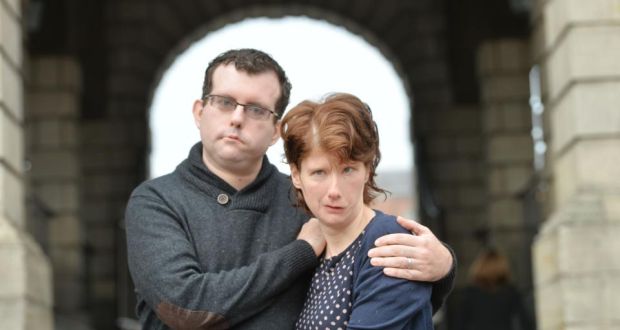
Gareth and Emma, who were born with a very rare condition called Moebius syndrome, which means they struggle to make facial expressions, blink or move their eyes laterally. Photograph: Alan Betson Gareth and Emma, who were born with a very rare condition called Moebius syndrome, which means they struggle to make facial expressions, blink or move their eyes laterally. Photograph: Alan Betson

Before he met Emma, Gareth Roberts’s life in Wales was quite lonely. Comfortable, he says, but lonely. He struggled to make friends and had never had a real romantic relationship. He felt most at ease at home with his parents. When he met people for the first time, Roberts would ask himself: should I let them know about my condition straight away or casually drop it into the conversation?
He never imagined that he would meet and fall in love with an Irish woman who, like him, suffered from Moebius syndrome


“If someone had said to me five or six years ago that I’d be here . . . Not in my wildest dreams did I think I’d actually meet someone to have a relationship with. What makes this a special relationship is because I think we appreciate it more, because things have come together in quite a unique way.”
Within minutes of meeting Roberts and his wife, Emma Donnelly, it becomes clear that the newlyweds are very happy. After they met in 2009, Roberts moved to Dublin to be closer to Donnelly. In June 2015, the couple exchanged vows in Cappoquin, Co Waterford, surrounded by a small group of close friends and family.
The story of how this couple met is far from your average love match. Moebius syndrome is an extremely rare congenital disorder that means they are unable to make facial expressions, blink or move their eyes laterally. About 200 people in the UK and only a handful of Irish people have the condition.
As a child, Donnelly’s parents treated her exactly like her twin sister, who doesn’t suffer from the condition. The family only discovered she had Moebius syndrome when she was 12, even though Emma later discovered through her medical record that doctors were aware of her condition at birth.
Roberts, an only child, was brought up in the town of Wrexham, north Wales, by loving parents who did “their absolute best” to give their son a happy childhood.
“I have found it hard for most of my life to make friends. I’m not one that would pin all that on my condition, but I think people do take for granted facial expressions, and that’s understandable because it’s like breathing: something so natural.
“When you’re talking to someone, you expect to see certain facial expressions, and when you don’t see those indicators – like a frown, or a grimace or whatever – then it’s hard for that person to relate to the other person. I’m not saying that barrier is insurmountable but it’s definitely a hard barrier for people to overcome.”
Met on the internet
The couple first made contact in 2008 through an internet forum set up by the Moebius Research Trust. Roberts had only ever met one person with the condition before and he walked away from that experience feeling a bit “spooked”.
“She had the condition a bit more severe than myself, so I found it quite a shock to be honest,” he says. Some people with Moebius have intellectual disabilities while others can suffer from symptoms of autism, he says. “You know no different and then you see someone else with the facial paralysis, so to speak, and it’s a bit unnerving.”
After chatting online with Donnelly for a few months, he arranged to travel to Dublin to meet her. She spent a few days showing him around the city. She was surprised when he called a few weeks later to say he would like to visit again. Like Roberts, she had never been in a relationship before.
“Because I’d had no experience of relationships, I didn’t really know what I was feeling, emotions-wise,” says Roberts. “Was I having an attraction because Emma had the same condition as me, or was it because Emma was a friend?”
After his second trip, he wrote her a letter spelling out his true feelings for her. By September 2009 the couple were “in a relationship”, and in early 2010 he decided to move to Dublin after a job opened up for a fraud analyst in a gaming company.
“I had no real commitments and was still living with my parents. My job in the UK was quite secure, but if our relationship was to progress, at some point someone was going to have to move.”
The couple were nervous about taking such a big step relatively early on in the relationship. “Because it was my first relationship, was I taking too big a step? But on the other hand, was this opportunity ever going to come around again?”
“The phone bills were getting very high,” says Donnelly. “We got together not because of our condition but because we fell in love with each other.”
Roberts had expected Ireland to be quite similar to his home in the UK. “Because we speak the same language, there would be a lot of British shops and British TV, so from my perspective there are a lot of home comforts. But there is a definitely a difference. I know it’s a cliche but the people here are so friendly and generous.”
Definitely Irish
Now that he has married to an Irish woman, Roberts says he considers Ireland his home.
“Last year on budget day, I was waiting for a bus on Kildare Street and this guy with a microphone comes up to us. I ended up on the BBC World Service talking about the Irish budget, so I thought, I’m definitely Irish now.”
Roberts is fascinated by Irish history and has taken the time to read about the Easter rising ahead of the 2016 centenary celebrations. “The history of Ireland, growing up in the UK, the only thing you’d hear about in the news would be Northern Ireland and the Troubles. I’ve really enjoyed learning about the whole history of Ireland.”
Roberts and Donnelly are now eager to create a greater awareness of Moebius Syndrome. “We want to give hope to the parents of children who have recently been diagnosed with Moebius, that your children can have a happy and fulfilling life.”


*******************************

Friday, October 23, 2015

FRIDAY FOOTBALL PICKS

It is that time again!
Last week's record:  10-6.
For the year I am:  59-41.

NFL PICKS

Buffalo at Jacksonville.  My pick:  JAGUARS   24-17.  The Jags are probably due; and...more importantly...the Bills have a ton of injuries.

Tampa Bay at Washington.  My pick:  REDSKINS   24-14.  I don't really think either team is very good; but the Skins at home, with that running attack, with Jameis Winston's penchant for making mistakes, should prevail.

Atlanta at Tennessee.  My pick:  FALCONS  31-14.  Atlanta has had 10 days to stew over its first loss.  The Titans, reeling a bit anyway, will be the ones to suffer for it.

New Orleans at Indianapolis.  My pick:  COLTS  31-24.  Indy lost last week to the Pats, partly thanks to that crazy punt call; but they played the Pats tough and seem to be improving.

Minnesota at Detroit.  My pick:  LIONS  24-23.  Maybe the Lions have a tiny bit of momentum now; what really helps them is that they've realized they've got to get the ball deep to Calvin Johnson.

Pittsburgh at Kansas City.  My pick:  CHIEFS  20-13.  Mainly because I don't believe the Chiefs are as bad as their record; and...if Landry Jones really has to play the whole game for the Steelers, he will have a tough time.

Cleveland at St. Louis.  My pick:  RAMS  26-13.  Both teams are kind of Jekyll and Hyde.  My prediction:  the good Rams show up, with a tough defense.

Houston at Miami.  My pick:  DOLPHINS  23-13.  The Dolphins have some momentum; look for the Dolphins' front to pressure Brian Hoyer a great deal.

NY Jets at New England.  My pick:  PATRIOTS  28-10.  The Jets have a good defense, but...its nothing Brady hasn't seen before.

Oakland at San Diego.  My pick:  CHARGERS  24-21.  The Chargers lost vs Green Bay but played respectably; this time they'll get the win.

Dallas at NY Giants.  My pick:  GIANTS  21-14.  I'm just not convinced that Matt Cassel is the savior; meanwhile, no way Eli Manning plays as poorly in this game as he did Monday night.

Philadelphia at Carolina.  My pick:  PANTHERS   30-27.  Its surprising that Carolina remains undefeated, but...look for the party to continue at least one more week.  I still don't think the Philly offense is in sync.

Baltimore at Arizona.  My pick:  CARDINALS  31-21.  That Ravens' secondary is a mess; look for the Cardinals to exploit it big-time.

Wednesday, October 21, 2015

MOEBIUS SYNDROME IN THE NEWS: UK EDITION

You may have seen this already.  But just in case you have not--read up on the story of young Moebius hero Isaac Hughes:

*********************************

Joker Isaac Hughes loves to tease and make fun of his pals – even though he was born with a condition that means he can’t smile.
The eight-year-old was diagnosed with rare Moebius Syndrome after leaving doctors baffled for the first months of his life. It affects just 200 people in the UK.
“Isaac couldn’t feed properly and there were a few bits and bobs that indicated something was not right,” mum-of-two Ceridwen, from Mold, said.
Doctors initially thought Isaac – which means ‘he will laugh’ in Hebrew – might just be unusual.

“They did genetic testing but that only picks up certain conditions,” photographer Ceridwen said.
“Moebius is incredibly rare so there is no genetic test for it at the moment.
“Because it is so rare most doctors have not seen it before.
“What happens is that they have eye problems, because they cannot move their eyes left or right.
“Isaac also had a really severe squint.”
At six months Ceridwen and Isaac’s dad, Philip, found out what was wrong.
“Like any parents we wanted to know what to do for the best.
“We did research into it and we telephoned around and spoke to different consultants to see if they had seen anyone with this condition.
“Luckily I spoke to one of the consultants at Alder Hey, in Liverpool, who said he was happy to speak to us.”
Isaac had low muscle tone when he was born.
“He could not crawl until he was one, one-and-a-half, and he did not walk until he was two-and-a-half, three,” Ceridwen said.
“Then he used a walking aid. He was walking independently by about four.”
The youngster also has verbal dyspraxia.
“Because of that he could not speak well,” Ceridwen said.
“He could say very little before he was about six-and-a-half. He can speak much better now but not necessarily always very clearly.
“But he is clever at being able to communicate.”
He likes to make fun.
“He teases people and makes jokes,” Ceridwen said.
“I don’t know how he does it. Because if you have a face mask on how on how do you communicate?
“He has got a really good sense of humour. He likes the same things most boys do.
“Even though he could not talk he could tell a story. He is just really good at using the tools that he has. He might mime or use sign. He could probably draw a picture. He is incredible tenacious.”
Sometimes people feign understanding what Isaac has said.
“One of the most important things with Moebius, or anything, is that is that you do not pretend that you know what someone means when you don’t have a clue,” his mum said.
“Give him a chance to make it clear. He is an intelligent boy and will know if you do not understand.”
Ceridwen was worried people could not get past Isaac’s problems to see how bright he is.
“People make judgements because he looks different and could not speak,” she said.
“People perhaps make an assumption that he perhaps has a learning disability, which he doesn’t.
“It is difficult when you think people are judging people on the way you look.”
So the 46-year-old set up not-for-profit organisation Same But Different to encourage people to see beyond looks.
“I set up Same But Different in May this year after having spoken to a few families with rare conditions,” she said.
Ceridwen embarked on a project to take photographs of youngsters with disabilities.
“There are a lot of preconceived ideas and people do not necessarily want to ask, ‘What is wrong with your child?’ she said.
“We wanted to break down barriers and give people a way of finding out about conditions.”
Ceridwen took images of children including Isabel Gardner, who has encephalitis, and Matthew Hogg, who has Crouzon Syndrome.
Encephalitis is an inflammation of the brain while Crouzon Syndrome causes a child’s skull and facial bones to fuse early in development.
“They show the real person and hopefully the beauty within,” Ceridwen said.
“We are using those images to hold exhibitions and put them in different places like hairdressers and restaurants and cafes.
“There is a back story with each image, a small amount of information to find out about the person and not just the condition.”
Isaac’s condition is not terminal but Moebius Syndrome can lead to other complications.
“When you are first given a diagnosis about something all of your ideas and thoughts about how life is going to pan out change,” Ceridwen said.
“In a way you almost mourn the person you thought your child was going to be.
“But as time goes by you realise that while life is not as you expected it to be it brings you a lot of joy for the small things.”
*To find out more about Same But Different visit www.samebutdifferentcic.org.uk or email Ceridwen directly at ceri@samebutdifferentcic.org.uk

**************************