There are several items in the news today that either highlight growing awareness of persons with physical and other differences...or that highlight the lack of same.
First: there is evidence that, sadly, doctors sometimes too-easily dismiss parents' autism concerns (autism is sometimes associated with Moebius Syndrome):
***************************
Pediatricians often fail to take seriously parent concerns about autism, new
research suggests, sometimes delaying children from receiving a diagnosis and
treatment for years.
In a study looking at the experiences of children diagnosed with autism as
compared to those with intellectual disability and developmental delay,
researchers found that doctors were 14 percent less likely to take a proactive
approach when families cited concerns about autism.
Rather than refer children to specialists or for developmental testing, the
study found that pediatricians often reassured parents worried that their child
might be on the spectrum or indicated that their child “would grow out of
it.”
“This study implies that the behavior of health care providers is likely a
very important factor in delayed autism identification,” said Katharine
Zuckerman of Oregon Health & Science University who led the study published online this week in The
Journal of Pediatrics.
For the study, Zuckerman and her colleagues looked at data from a
nationally-representative survey of parents of 1,420 children with autism and
2,098 kids with intellectual disability or developmental delay.
Parents of those later diagnosed with autism said they expressed concerns to
their health care provider about their child’s development around age 2, a whole
year earlier than moms and dads of kids with other delays. Nonetheless, among
families surveyed, children with autism were not diagnosed until age 5, on
average, even though kids with the developmental disorder can generally by
identified by age 3.
Significantly, the study found that children whose doctors were passive about
initial autism concerns waited as much as two years longer to be diagnosed as
compared to those whose health care providers were immediately proactive.
“We know that early identification of ASD is beneficial to children and their
families. Unfortunately, many families experience long delays between when they
first have concerns and when their child gets diagnosed with ASD,” Zuckerman
said.
The findings, researchers said, indicate that doctors may need more education
and training to better respond to parent concerns related to autism in
particular.
Currently, the American Academy of Pediatrics recommends that doctors conduct
developmental screening at 9, 18 and 30 months with all children as well as
autism-specific screening at 18 and 24 months.
*********************************
But there are also positive notes. For example, ESPN and ABC will this summer air the Special Olympics:
*********************************
For eight days this summer, some of the world’s top athletes with
intellectual disabilities will be featured on national television.
ESPN said this week it will air coverage of the Special Olympics World Games
in Los Angeles across its networks.
The event’s opening ceremony will be broadcast live on ESPN co-hosted by
Robin Roberts from ABC’s “Good Morning America” and ESPN’s Lindsey Czarniak and
Kevin Negandhi.
Subsequently, ESPN, ABC or ESPN2 will air daily coverage of the weeklong
event including features and key results from the competition. A “best of”
special recapping the World Games will also be broadcast over two days a week
later.
“The Special Olympics World Games is a truly compelling event, filled with
some of the most extraordinary sports stories and people you will ever see, and
we are looking forward to showcasing them,” said Russell Wolff, executive vice
president of ESPN International. “Sports has the power to be unifying, uplifting
and life-changing, and this event will be a remarkable and tangible example of
that power.”
Previously, ESPN provided more limited online coverage of the 2011 Special Olympics World Games in Athens,
Greece.
The Los Angeles games are expected to bring together some 7,000 athletes and
3,000 coaches from 177 countries in addition to 500,000 spectators for the event
July 25 to August 2.
***********************************
And finally: did you know that Masters' winner Jordan Spieth has a sister with special needs? The newest winner of the Green Jacket was only too happy to talk about her:
************************************
Basking in the glow after becoming the second-youngest player ever to win one
of golf’s top prizes, Jordan Spieth was all too happy to talk about his sister
with special needs.
Over the weekend, Spieth soared over golf’s better-known names to win the
Masters with a score of 18 under par. The feat quickly put the 21-year-old in
the same sentence with the sport’s longtime star, Tiger Woods, who also won the
tournament at that age.
After sealing his victory at the famed Augusta National Golf Club in Augusta,
Ga., Spieth looked forward to telling his sister Ellie, 14, who is on the autism
spectrum, about his win. The younger Spieth didn’t make it to Augusta for the
Masters, but did get to see her brother play at the Houston Open earlier in the
month.
“She’s just going to be happy that I won,” Spieth said. “She was out there in
Houston and after each round, she said, ‘Jordan did you win, did you win?’ I
said ‘not yet, not yet’ and then ‘no.’ So I can tell her I won now.”
The comments came in between questions about everything from his performance
at the Masters to the future of golf.
It’s not the first time, however, that Spieth has opened up about his
relationship with his sister.
“Being Ellie’s brother humbles me every day of my life,” the golfer says on
his website.
And Spieth’s mom, Chris Spieth, credits her daughter’s challenges with
keeping the golf champion grounded.
“Jordan wouldn’t be where he’s at today if he didn’t grow up with Ellie,” his
mom, Chris Spieth, told ESPN. “Jordan realizes this
isn’t real life at the Masters. Trying to sit around and have dinner when his
sister doesn’t want to eat when everybody else is eating and has a fit, that’s
real life.”
**************************************
Monday, April 20, 2015


Thursday, April 16, 2015
I-JUST-THOUGHT-THIS-WAS-INTERESTING DEPT: 10 TRUTHS FOR SUCCESS AND SATISFACTION
Because who doesn't want that? Read more about it:
************************************
The two things most people search for in life are simple. People desire happiness and to feel satisfied with their lives. There are simple truths which can be applied to everyday life which guarantee greater success and that deep sense of personal satisfaction you yearn to experience in your life and career.
1. Just Do You: Be yourself. Let the results of your life be a reflection of your boldness to express your freely. Take care to exercise your own ideas, your free will and independence. Live from your individual uniqueness and the willingness to be different than others.
Your authenticity is that place within you that is true and secure enough to withstand the external destructive pressures that come from life.
When you are true to yourself and passionate about your life and career, you see choice rather challenge. Your genuine qualities are not set up on false pretenses because whatever path you choose in life is completely congruent with who you are.
2. Be Candid: There is nothing of greater significance to offer your life or business than honesty. To understand why being truthful is important examine how anyone, including yourself, benefit from dishonesty.
The one thing you cannot afford to lose in life is your reputation. Once your reputation is lost, based upon dishonesty, it is nearly impossible to recover it.
Living from the truth allows you to build relationships based in trust with loved ones, colleagues, competitors, staff, and customers. Those around you become energized by your candor inspiring them to want to progress their business and personal relationships with you forward.
3. Push yourself: In order to make the most of your life and career, challenge yourself. You cannot fulfill even a fraction of your dreams by sticking to the comfortable and secure. Where there is security there is nothing forcing you to rise to the occasion of maximizing the potential of who you are.
Challenge yourself to always be in pursuit of something which will stretch you. You have to have that "thing" that will make you wonder if you can actually achieve it. That elusive "thing" provides you the opportunity to engage in life, and in yourself, in ways that being secure and comfortable do not.
The more you push yourself and flourish, the greater your confidence becomes to push yourself again and again. Challenge not only helps you grow your skills and knowledge, it helps you develop belief in your capacity.
4. Put love first: The significant people in your life are those who genuinely feel for and worry about you. These are the individuals who will always be there, to fall back upon, when you have been disappointed by life.
The people who love and accept you, with your mistakes and weaknesses, and do not need you to be different are those who bring the most value to your life. They help refuel your belief in yourself when you cannot.
There is no amount of financial gain that could ever substitute for the love these individuals offer you. They bring a sense of connectedness and belonging which serve to make your life happier and more fulfilling. Those who do not value their loved ones are less well-rounded, less happy and less motivated and successful in life. Do not let this be you.
When you die you are not likely to wish you had worked more, you are likely to wish you had had more time with those you loved deeply.
5. Show Kindness: Treat all of those you interact with, with a sense of dignity and value. When you can make another person feel significant they will be motivated to stay in that perception in your mind.
Being thoughtful of others doesn't make you a push over. Thoughtfulness is that indistinguishable quality of being emotionally intelligent in all your exchanges. When you treat others with openness, kindness and respect you retain a calm power to stay rational and present in your communications.
Keep in mind that anger is never useful in relationships, personal or professional, as it is nearly impossible to respect an angry person. Anger doesn't wear intelligently on anyone.
6. Practice tolerance: Be mindful of others in the ways you expect others to be mindful of you. Practice tolerance and acceptance to bring a sense of peace to your life and world at large. Let go of small-mindedness, bigotry, belittling others, and being self-righteous.
Tolerance is an essential quality to possess. Think about who you are in the global world, or in the wholeness of life, and what you want your impact to be. Strive to be that bigger person.
Be open-minded to learning from all types of people and their differing beliefs, as you never know what type of person holds your next biggest opportunity in their hands.
7. Exercise Patience: Knowing the difference between patience and waiting is key to a successful life and career. Patience does not entail waiting. Waiting is action-less. When you practice patience you never stop working towards your dreams, even when you do not yet see results.
If you are waiting without working, you have stopped. When you are passionate there is no amount of work that you will cease doing if you see it as bringing you closer to your goals.
Patience means believing enough in what you have set out to achieve to keep going.
8. Fulfill your dreams: Do not just follow your dreams, you must fulfill them. Make each wish into a manifested destiny. Work towards your passions with consistency, precision and commitment.
Living your dreams is the stuff a well-live life is made of. What you pursue passionately will bring you a life of vitality, excitement and the joy that you deserve.
Your dreams and passions bring deeper meaning into your life and into the lives of others. When you live your dreams you become inspiring. You instill in others the belief that if it is possible for you then it can also be possible for them.
9. Practice gratitude: When you have a grateful heart your positive emotions become stronger, decreasing your negative emotional experiences of envy, victimology and jealousy. Gratitude makes your memories more positive and is a great catalyst in helping you to bounce back quickly from stress.
An attitude of gratitude helps you achieve life and career goals making your personal and professional lives more loving, productive and enjoyable places to be for you and everyone you touch.
10. Remain humble: Work quietly and allowing your success to do the talking. Humility is based in internal reflection, yet, when it comes to where you choose to focus your time and energy, it is all about other people for you.
In being humble you are not self-focused or worried about your image, which gives you more courage to risk and try new things. You are not compelled to try and be perfect because you are not stuck on expectations. This frees you from the paralysis of fearing failure because it is not your main concern.
When you are humble you approach life with openness and flexibility. You are not oppressed by the search for happiness or success, for yourself alone, because your main focus is not about trying to be either successful or happy. Instead you are caught up in projects, passions, people and things you consider bigger and more important than yourself and from this you end up with more happiness and success, as a simple byproduct.
The surest path to becoming happy and successful in life is in the helping of others to achieve the happiness and success they desire.
To experience happiness and that deep sense of well-being and satisfaction with who you are, what you are doing, and who you still desire to become you must contemplate daily on what it means to be authentic. You must be committed and deliberate in your search to challenge yourself, to face fears, to be good to others and to be the conscious creator of the wholeness of your overall life experience.
Sherapy Advice: Live these 10 truths as a daily meditation to practice and master.
Follow Sherrie Campbell, PhD on Twitter: www.twitter.com/Dr_Sherrie
**************************************
Wednesday, April 15, 2015
AWARENESS UPDATE: ANGELINA JOLIE SAYS--DIFFERENT IS GOOD
And that's something that we with Moebius Syndrome can get behind. Let's face it: out in the world, that's how many people are going to see us. And that's okay. We can embrace it! Because being "different" is good. You're just as valuable as anyone else. That's the message that we and others need to keep putting out there. Had you heard that Ms. Jolie had said this? She did so in a speech last month. Good for her; and below you can read more about it:
***********************************
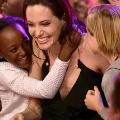
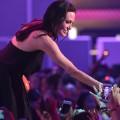
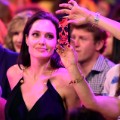
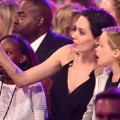
Angelina Jolie took the stage Saturday at Nickelodeon's 28th Annual Kids' Choice Awards and delivered a message of hope to anyone who's ever felt out of place.

***********************************
Angelina Jolie took the stage Saturday at Nickelodeon's 28th Annual Kids' Choice Awards and delivered a message of hope to anyone who's ever felt out of place.
In her first public appearance since revealing that she underwent a second preventive surgery to lower her risk of cancer, Jolie attended the show with her children, Shiloh and Zahara.
She hugged them before she went to the stage to accept the favorite villain award for her role as Maleficent in the live-action reimagining of "Sleeping Beauty."
"When I was little, like Maleficent, I was told that I was different. And I felt out of place -- too loud, too full of fire, never good at sitting still, never good at fitting in," the 39-year-old actor and humanitarian said.
"And, then one day I realized something, something that I hope you all realize: Different is good," she said, prompting enthusiastic screams from the young crowd.
"And, as your villain, I would also say cause a little trouble -- it's good for you."
Angelina Jolie delivers empowering speech at Kids' Choice Awards



Jolie's career has been full of unconventional twists and turns, from her breakthrough role in the biopic "Gia" to her current role as an actor, filmmaker and special envoy of the U.N.'s High Commissioner for Refugees.
Her personal life also has made front page headlines over the years, including her adoption of children from developing countries and her candor in discussing her health.
Jolie, 39, wrote Tuesday in a New York Times essay that she had opted for the surgery after blood tests revealed markers that might have been an indication of early cancer.
Two years ago, she underwent a double mastectomy for similar reasons. Jolie's mother died of ovarian cancer, and the actress has a gene mutation that makes her chances of developing breast cancer and ovarian cancer much higher than the overall population.
Jolie's revelation provoked an outpouring of support as the news spread across social media.
"It is not easy to make these decisions. But it is possible to take control and tackle head-on any health issue. You can seek advice, learn about the options and make choices that are right for you. Knowledge is power," she wrote.
**********************************
Tuesday, April 14, 2015
A REMINDER ABOUT THE VALUE OF SERVICE DOGS AND THERAPY DOGS
Did you know that anyone with a disability or with physical special needs can qualify to acquire a service dog? That includes some persons with Moebius Syndrome. It's true, and I have blogged about that in the past---for example, check this out.
And it is always helpful then to be reminded of how valuable service dogs and therapy dogs can be. Here's a good recent story that lays this out--read on:
*****************************************
And it is always helpful then to be reminded of how valuable service dogs and therapy dogs can be. Here's a good recent story that lays this out--read on:
*****************************************
A 6-year-old Portuguese
water dog named Moxie has shed light on the furrier side of medicine -
providing a dog's-eye view of her job as a therapy dog as she cuddled
with patients and staff.
On a recent visit, Moxie's owner set her up with a GoPro as she took her weekly Thursday tour at the Hospital for Sick Children in Toronto.
Owner Carolyn Robinson said Moxie always knows who needs the most help
when she enters the hospital room going from patient to caretaker to
medical staff.
"[She is] touching the lives of so many patients and children, "said
Robinson. "Being able to alleviate [stress]…animal therapy is all the
benefits of chocolate minus the calories."
Moxie may not technically be part of the medical treatment, but Robinson
said the dog can help increase endorphin levels and even help children
on the road to recovery after surgery. In certain cases, Robinson and
staff can get children on their feet to go for a "walk" with Moxie.
"I’ve had nurses say to me, 'We tried absolutely everything to get this
child out of bed and then Moxie came along and the child got out of bed
and walked [the dog],'" Robinson said.
Moxie had to go through extensive training so that she remains calm in
all situations and is groomed before every visit to the hospital.
Robinson said Moxie seems to take her duties as a therapy dog very
seriously.
"When that uniform is on her, she is right by my side," Robinson said.
"She is on duty. She knows she is there to give her love."
After a long day's work, Robinson said she can tell Moxie is tired out.
"After her day is done, she’s quiet," said Robinson. "She’s content…she loves what she does."
Moxie was able to start visiting the hospital thanks to the PetSmart Paws for Hope Program at the Hospital for Sick Children.
***************************************
Be sure and go to the original link to this story above; there are some great pictures and videos.
Thursday, April 9, 2015
BRAIN TALK DEPT AND I-JUST-THOUGHT-THIS-WAS-INTERESTING DEPT
You know, Moebius Syndrome has a lot to do with the brain. The reason we have at least partial facial paralysis, after all, is because two of our nerves from the brain to the face don't work as we'd like them to. So we're always interested in this space about how the brain works, and the article below gets into that question. Plus--I just thought it was interesting (of course!). So read on--are our brains really as good at multi-tasking as we think they are??? The answer might surprise you:
***********************************
Our brains on multitasking aren't nearly as good as we think they are. Let's say you're working on an activity over here, on the right side of the brain, and suddenly you're trying to multitask another activity, like talking on the phone.
***********************************
Our brains on multitasking aren't nearly as good as we think they are. Let's say you're working on an activity over here, on the right side of the brain, and suddenly you're trying to multitask another activity, like talking on the phone.
You're
not actually doing both activities at the same time, in fact, you're
now diverting your attention from one part of your brain to another part
of your brain. That takes time, that takes resources, that takes brain
cells.
What happens on the other side
of the brain is that you're starting a brand new activity, so in fact
you're probably slower and not nearly as good at doing both activities
at the same time.
We can shift our focus really fast, sometimes it takes just a 10th of a second.
But the time doesn't matter as much as the bandwidth the brain
requires to move back and forth. Now that might affect your performance,
and might also affect the quality of the work that you finally produce.
Take
an everyday activity like driving. When you look at the MRI of someone
who is in driving mode, see how much of their brain is activating there?
Now if you just layer in one more thing—if person is listening while
they are driving—and all of a sudden the amount of attention, the amount
of brain bandwidth going toward driving decreases by about 37%. So you're not multi-tasking, you've in fact reduced the amount of attention you're now paying to your driving.
There's about 2% of the population that are super multitaskers.
It's sort of a genetic gift. Most of us don't have this gift. But these
are people who are truly able to do several different activities at the
same time without losing efficiency or losing quality as they do all
that work.
This may or may not surprise you, depending on your perspective, but there have been studies that show women are generally better at multitasking than men. Also, people who thought they were the best at multitasking are almost always in fact the worst. Perhaps they were multitasking too much when they thought they were good at multitasking.
******************************************
Wednesday, April 8, 2015
AWARENESS UPDATE: EMPLOYMENT NEWS
If one has Moebius Syndrome, one might--though by no means will this always be true, not at all--also have autism. So the two pieces below are good news, as it is always good news when companies and institutions show more awareness and value to those with physical and other differences:
**************************************
First, we have this piece concerning Microsoft:
The launch of a new pilot program positions Microsoft as the latest corporate giant looking to tap the employment potential of those on the spectrum.
The company says plans are underway to hire individuals with autism for full-time positions at its Redmond, Wash. headquarters.
Microsoft said it will work with Specialisterne, a nonprofit that focuses on helping people with the developmental disorder apply their talents to work in the technology field, to facilitate the hiring effort.
Initially, the program is expected to include about 10 people with autism, a Microsoft spokeswoman told Disability Scoop.
“Microsoft is stronger when we expand opportunity and we have a diverse workforce that represents our customers,” wrote Mary Ellen Smith, Microsoft’s corporate vice president of worldwide operations, in a blog post announcing the pilot program. “People with autism bring strengths that we need at Microsoft, each individual is different, some have amazing ability to retain information, think at a level of detail and depth or excel in math or code.”
Smith, who has a 19-year-old son with autism, said that Microsoft already works with its vendor partners to employ people with disabilities in supported employment situations for roles in event services, transportation and food services. Though the new pilot program is focused on autism, Smith said Microsoft is “passionate about hiring individuals of all disabilities.”
Microsoft is not the first technology company to actively hire people with autism. SAP, a Germany-based software giant, has worked with Specialisterne to hire those on the spectrum in the United States and abroad.
***********************************
Then, there's this concerning the United Nations and one of its recent statements:
The leader of the United Nations is calling on businesses around the world to step up and do their part in employing people with autism.
U.N. Secretary-General Ban Ki-moon is launching a “call to action,” urging employers to make “concrete commitments” to hire those on the spectrum.
“We encourage public offices, corporations and small businesses to have a closer look at the way they perceive people with autism, to take the time to learn about the condition and to create life-changing opportunities,” Ban said.
The announcement came Thursday during events at U.N. headquarters in New York to mark World Autism Awareness Day.
As part of the call to action, employers are being asked to commit to a quantifiable increase in the proportion of their workforce that is comprised of individuals with the developmental disorder.
“People with autism have enormous potential,” Ban said. “That is why it is so important for companies to understand their unique and often exceptional skills, and to enable work environments where they can excel. This requires appropriate vocational training and adequate support alongside a recruitment process that can allow people to successfully integrate into workforces around the world.”
U.N. officials say they plan to recognize businesses that pledge to increase employment of those on the spectrum during next year’s autism awareness day activities.
*****************************************
Tuesday, April 7, 2015
FOR MOEBIUS MOMS AND DADS AND ALL MOMS AND DADS: YOUR FEARS?
Sometimes, for the sake of the kids, we have to get over them. I thought this was interesting, and true--read on:
**********************************
“Mommy doesn’t like ponies,” my husband said, laughing. “That’s not true,” I quickly said. My 2- and 4-year-old sons looked at me accusingly. “What Daddy means is that I don’t like them, I love them.”
My husband laughed out loud as we ushered our sons towards the corral.
We were at a 2-year-old’s birthday party at an animal farm and petting zoo. The kids had already hand-fed the alpacas, bottle-fed the baby goats. They’d visited the zebras, giggled as the camels spit. The birthday girl led the charge in petting the bunnies. Now it was time for the highlight of the birthday party, the thing all of the children looked forward to: the pony rides.
These parties are always a huge challenge for me. It’s not because of the smell and it’s not because of the cleanliness of the pens (or the lack thereof). The reason why—and the thing I don’t want my kids to know—is that I’m afraid of animals.
I was spending the summer in Nice, France on a study abroad program sponsored by my law school. As we racked up credits in international law, the students were also allotted long weekends to explore Europe. I should never have agreed to split up from my friend. We were told to travel in pairs, cautioned that running around Europe as a young single American woman was unsafe, bad things could happen. We could get robbed, we could get abducted, never to be heard from again. Our passports could get stolen. But we were only in Florence for two days, and my friend Reesa had already been to the Ufizzi and I was dying to go. The plan was simple—we’d part ways for an hour, and then meet back up at a little outdoor café in the Piazza della Signoria for cappuccinos.
In hindsight, I think I was being targeted by pickpockets, notorious in that touristy part of the city. They saw me split up from Reesa and figured I’d be halfway through the Botticellis and the da Vincis before I even realized my wallet and passport were gone.
It was a big push. I didn’t see who did it, but I felt a huge force smash into my shoulder from the left. I lost my footing, lurching towards the right. A horse drawn carriage was next to me, waiting for tourists. When the horse saw me barreling towards him, he opened his mouth wide and drew his teeth down on my arm. That’s the part I recall most about the incident—the part I can still see in my nightmares—this massive creature, head thrown back, lips parted wide, showing a seemingly endless array of gigantic teeth, coming towards me in attack.
It was just a love tap, I think. I’m certain that the horse could have taken off my arm if he wanted to. But it was a gentle warning. He was telling me that he was scared, and that I should get out of his space. You often hear people say good-naturedly: the animal is probably more scared of you than you are of him! But that was not the case. I was very much more afraid of him than he was of me.
I am not what you would call an animal person. I’ve always been terrified of them. Ever since my brother ran away from a neighbor’s dog, only to have the dog chase him down the street and then leave him with an enormous scratch down his back—a nasty wound that took weeks to heal—the message has been clear to me: don’t get too close. Don’t get them angry. Animals, even a beloved family pet, can hurt you.
After the horse bit my arm, I fell to the ground. My backpack flew off my shoulder. A crowd formed. A few people came to my aid, in languages I couldn’t understand, and a kind person returned my backpack. The owner of the horse yelled at me in Italian. I was utterly alone in a city where I didn’t know anyone, in a country whose language I couldn’t speak. I didn’t have a cell phone. I didn’t have anyone I could call, anyway. The only thing I could do was to wait for Reesa to return.
I made my way to the little outdoor café, ordered cappucino, and counted the minutes until she got back, silent tears escaping from my eyes as I tried to hold them back. By the time Reesa found me, I’d regained my composure, but seeing her and then having to re-live the story made me cry hysterical tears. She examined my arm, the horse bite hadn’t really broken the skin, but an angry bruise was taking shape. I never made it to the Uffizzi. With my fear of animals finally justified, rationalized, I vowed to never get near another one again.
But years later, I had children. Holding these tiny humans in your arms makes you realize something: you want them to be different from you in all the best ways. You don’t want them to have the same fears that you do, you want them to live a better life, a happier life than you do. I was adamant that my kids would not be afraid of animals the way I was. They would love puppies and kittens and bunnies just the same as any other normal kid. They would not be scared. And they certainly could never know that I had been bitten by a horse.
So, on the day that we found ourselves at an animal farm and petting zoo, I had a choice to make. I could let my own fears take over. I could tell my sons that I was afraid of the horses, I could tell them about the bite, and we could go home. But I didn’t. Instead, I had them stand in line with all of their friends and get ready for their first pony rides. My husband helped get them up into the saddles and instructed me to take pictures from afar. Very far. I got great shots of each of my children as they proudly took the reins and smiled for pictures. I stood behind the fence as the kids began their rides, and when the ponies made their way towards me, rounding the edge of the track, I backed the hell away.
Janowitz is a writer whose fifth novel “The Dinner Party” will be published by St. Martin’s next year. You can find her at BrendaJanowitz.com or on Twitter @brendaJanowitz.
****************************************
Subscribe to:
Posts (Atom)